Window Thermal Comfort
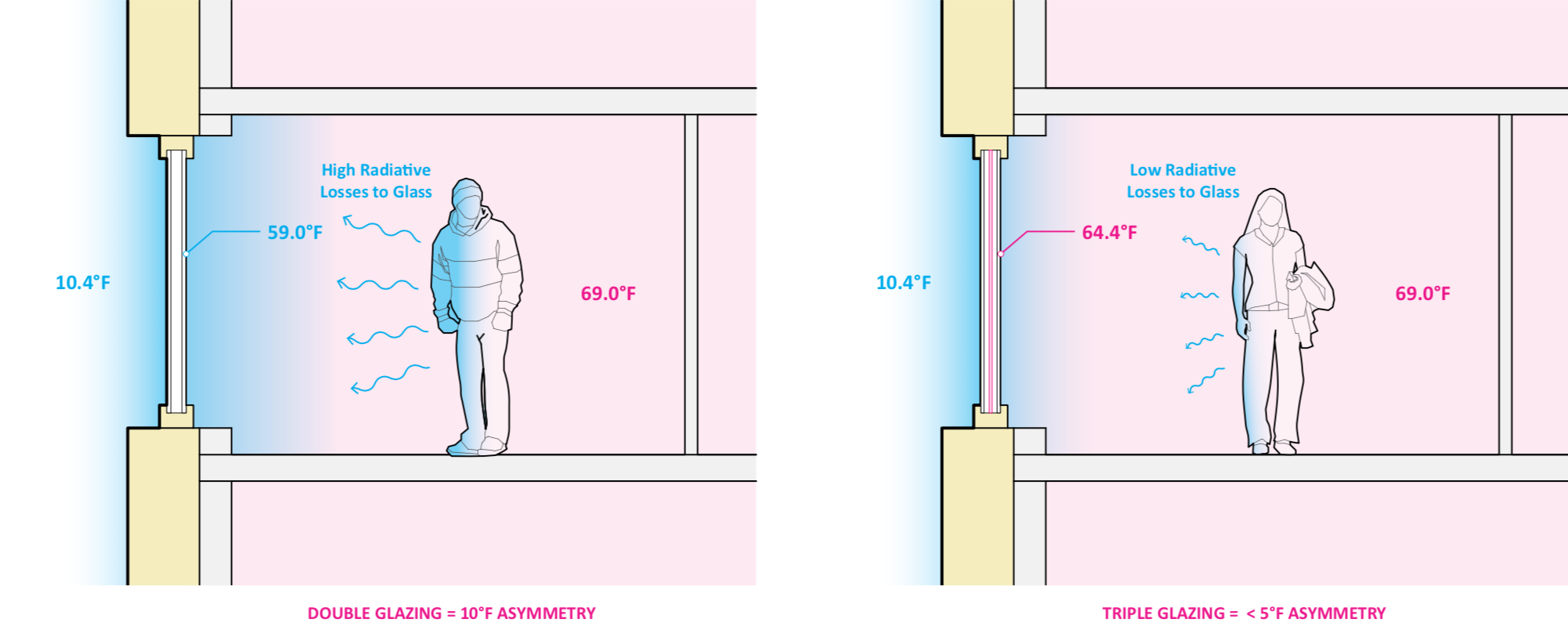
In a cold climate, double glazing results in low interior surface temperatures. 
                    Triple Glazing results in higher interior surface temperatures.

In any high-performance building, both the energy and occupant comfort impacts of the glazing should be carefully assessed. For a building seeking any of the PHI or Phius certifications, a very stringent evaluation and quantification of this thermal comfort impact must be executed. This comfort evaluation looks at the both the overall occupant comfort as a result of air-temperature and relative-humidity but also the localized thermal discomfort caused by cold-surfaces and drafts at the glazing surface.

In particular, the localized discomfort which results from a radiant temperature asymmetry (a difference in the temperature of the surfaces surrounding the body) must be assessed in order to evaluate the possibility of eliminating perimeter heating. If the radiant temperature asymmetry exceeds a certain level, a compensating heat source may be required in order to offset the potential discomfort.

Many engineering reference standards suggests that ideal thermal comfort is found when there are temperature differences of less than 7.6°F [4.2°K] between all surfaces around a person's body. The windows are important in this respect, as this is where the coldest surface temperatures in the building will typically occur during the winter months.

For Orange Co. NC's ASHRAE 99% winter comfort-design weather conditions [ 19.3°F / -7.1°C ], as long as windows with an Installed Rw higher than 3.7 hr-ft2-F/Btu [ Uw less than 0.27 Btu/hr-ft2-F ] are used this will lead to surface temperatures which Phius finds acceptable for thermal comfort. Note, for smaller windows with a lower 'view-factor' (less visible to the occupants) slightly lower R-Values may still achieve the same desired thermal comfort targets.

Window and Door Products

For the project here, the initial code minimum variant uses windows which just meet the 2018 North Carolina Residential Code / Climate Zone 4a limits (<U-0.35 Btu/hr-ft2-F).

As discussed above, Phius recommends using windows which are at least Uw-installed of 0.27 Btu/hr-ft2-F in order to satisfy winter thermal comfort requirements. For the project here, due to the amount of glazing, in order to achieve the challenging heating and cooling annual energy demand limits this project should utilize windows with an installed U-Value of less than 0.155 Btu/hr-ft2-F [0.88 W/M2-k].

While this is a challenging requirement to achieve, there are now several cost-competitive high-performance window products available in the North-American market at this point. Some good options for this project which can provide windows with a U-Value of 0.155 Btu/hr-ft2-F or better include:

Note: The window frames and glass specification are critical to the proper performance of the building. Before finalizing any window or door order for the project, please submit all window shop-drawings to the Passive House Consultants for review and approval.

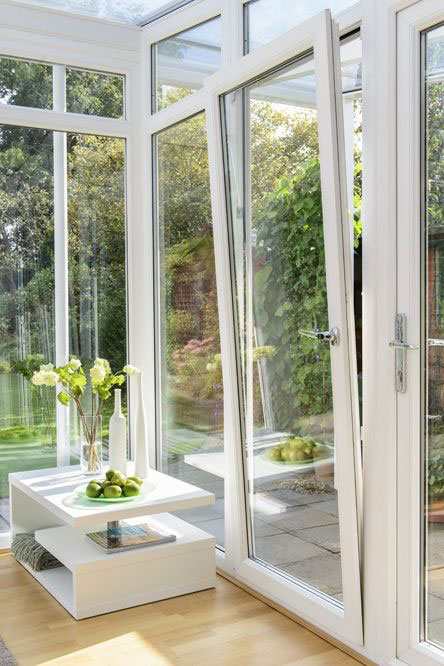
Tall Tilt-Turn Window / Door

Project Window Requirements

The following is an outline of the Passive House Institute of the US (Phius) certification performance and documentation requirements related to window and door products for this project. Note that no requirements here may contradict or override state or local code minimums. The requirements listed below are those relevant for Phius certification only. There may be additional performance requirements beyond those listed here in order to comply with all local codes. Note also that the documentation requirements for Phius certification are significantly different than typical North American code requirements and it is strongly recommended for all window and door suppliers to ensure that they are familiar with the requirements outlined below before providing price quotes to ensure that no requirements are overlooked during the planning phase.

Condensation Resistance (fRsi)


All window and door frames will comply with the Phius condensation resistance limits, calculated as per ISO-13788. The window supplier will select one of the following methods for compliance:

  1. Provide valid THERM models of all window and door frame profiles in order for the Passive House Consultants to calculate all fRsi values and ISO-13788 verification.
  2. Provide completed fRsi values, calculated as per ISO-10077-2, and verification of condensation resistance, as per ISO-13788, for all window and door installation details.
  3. Engage Phius to execute all required fRsi calculations for the project.

Installation Details (Psi-Install)


All window and door Psi-Install-Values are required in order to complete the WUFI-Passive compliance model and shall be provided by the window supplier. Window supplier to select one of the following options regarding the Psi-Install values:

  1. Provide valid THERM models of all window and door frame profiles in order for the Passive House Consultants to calculate all Psi-Install values.
  2. Provide completed Psi-Install values, as per ISO-10077-2, for all window and door installation details in order for the Passive House Consultants to utilize within the WUFI-Passive compliance model.
  3. Engage Phius to execute all required Psi-Install calculations for the project.

Required Certifications


Shop Drawings


Window supplier to provide drawings showing each unit configuration. Each unit to be noted / tagged with the following information:


Site Shading Conditions

The energy balance of the windows are critical on any high performance building project. The goal for this climate should be to take full advantage of wintertime solar gains in order to reduce overall heating energy need while always being cautious about the potential for overheating and increasing cooling energy need. This can be particularly challenging with highly glazed rooms or space which feature large amounts of south or west facing glass.

In the results below we have assessed the average seasonal (winter / summer) solar radiation falling upon the windows in the project. The radiation levels will vary by orientation and as can be observed, shading obstructions have a strong effect on the final level of solar radiation any individual window receives.

Shading Context

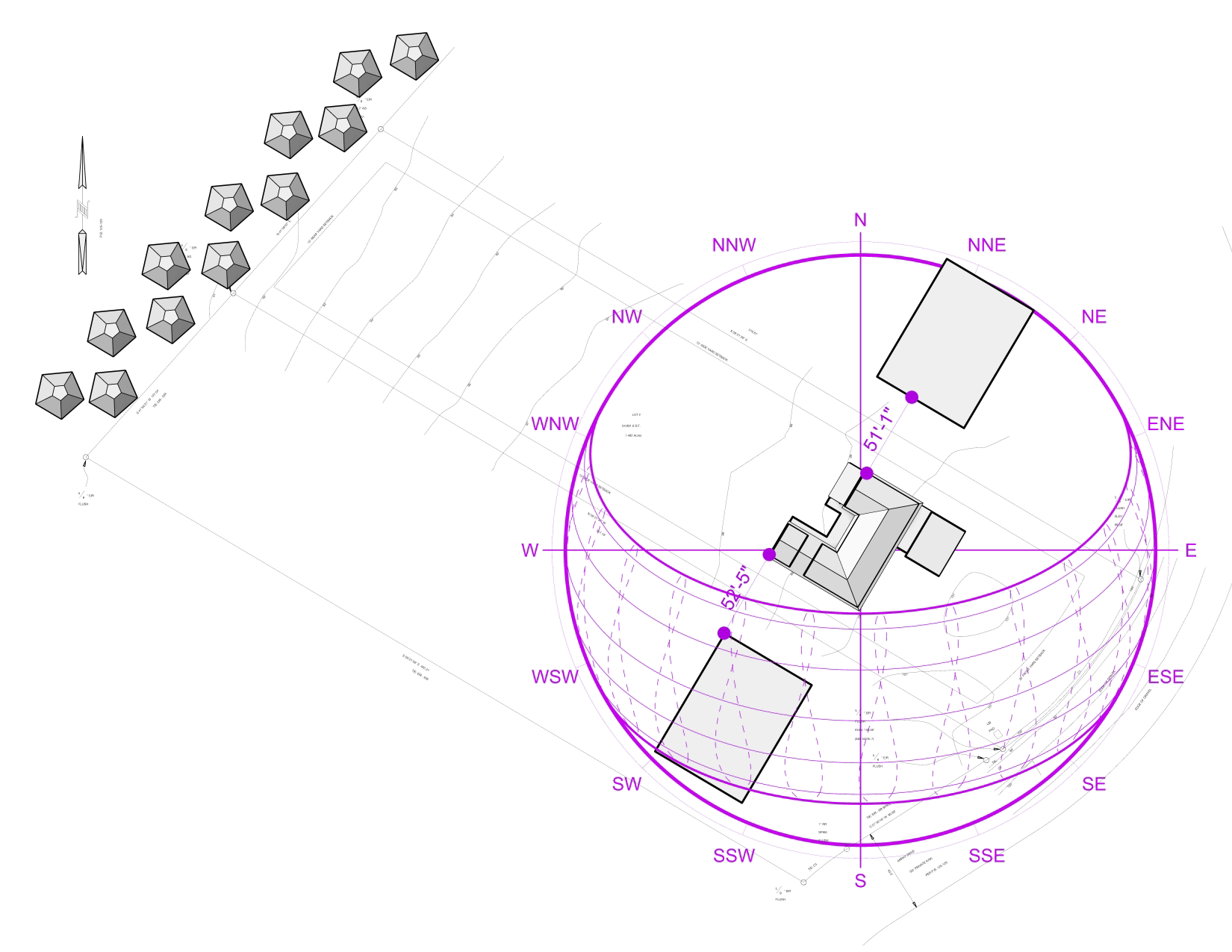
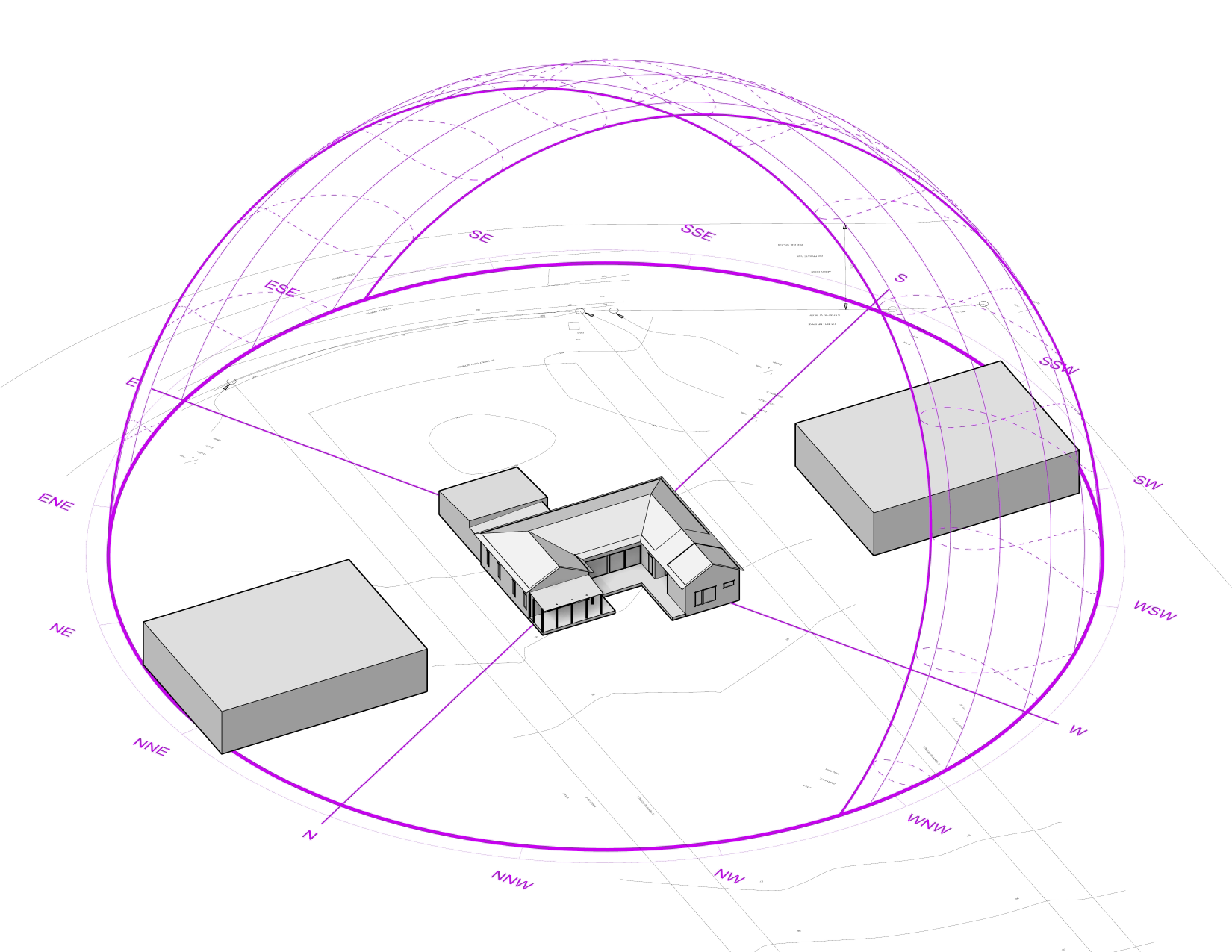
All radiation values presented below consider the local shading context. Where relevant, this context is created using satellite images from google maps and plot-lines from OpenStreet Map and CadMapper.

Site Sunpath Diagram: Plan View
Sunpath diagram, plan view
Site Sunpath Diagram: View from Northwest
Sunpath diagram, perspective view

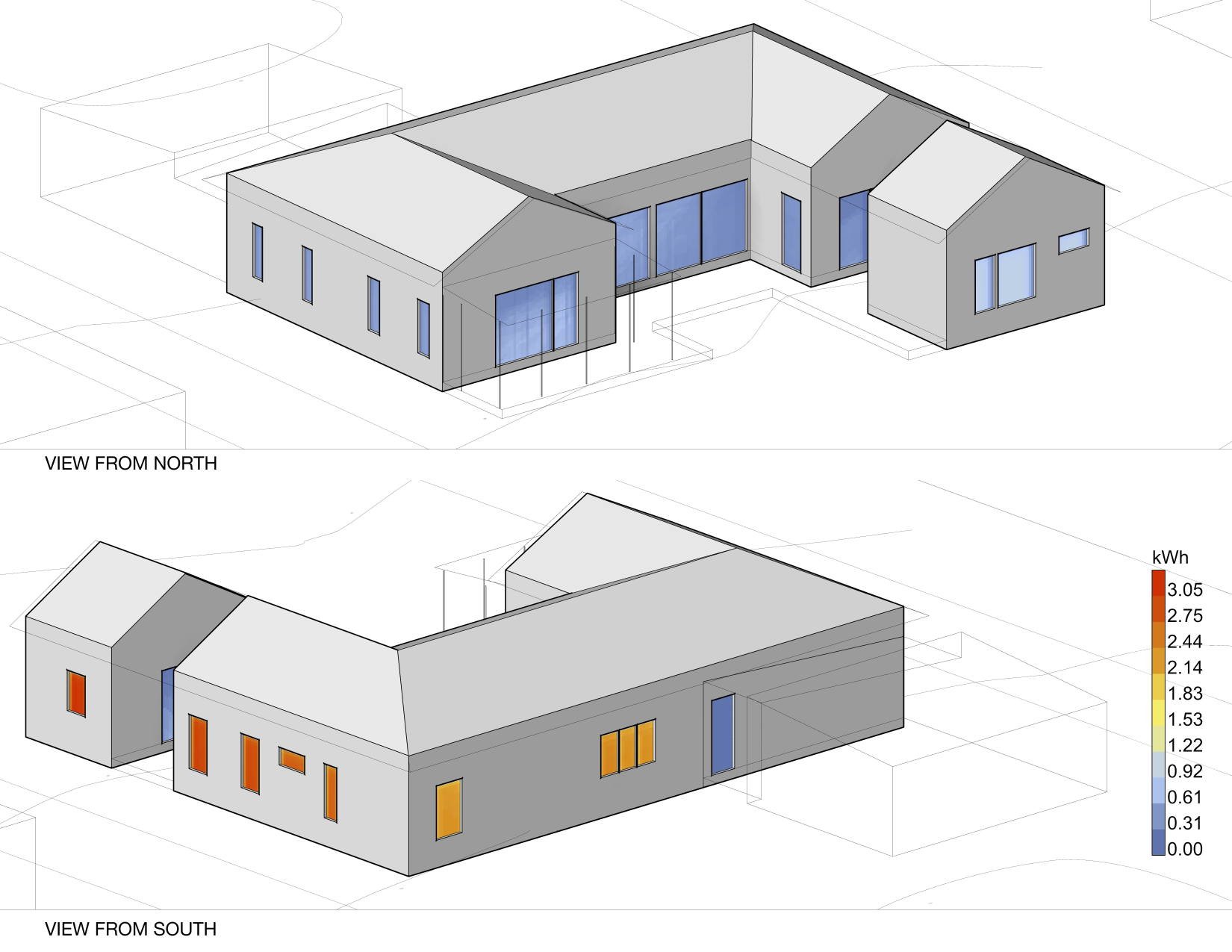
Winter Average Solar Radiation (kWh)

Winter Solar Radiation values seen from the north-west
  1. Very little south-facing exposure results in low useful solar gain during the winter period.
  2. No useful solar gain was observed on the north 'courtyard' facades. One possible performance improvement is to reduce the size of the north and west glazing by 5-10%, which would help reduce the winter heating energy demand.

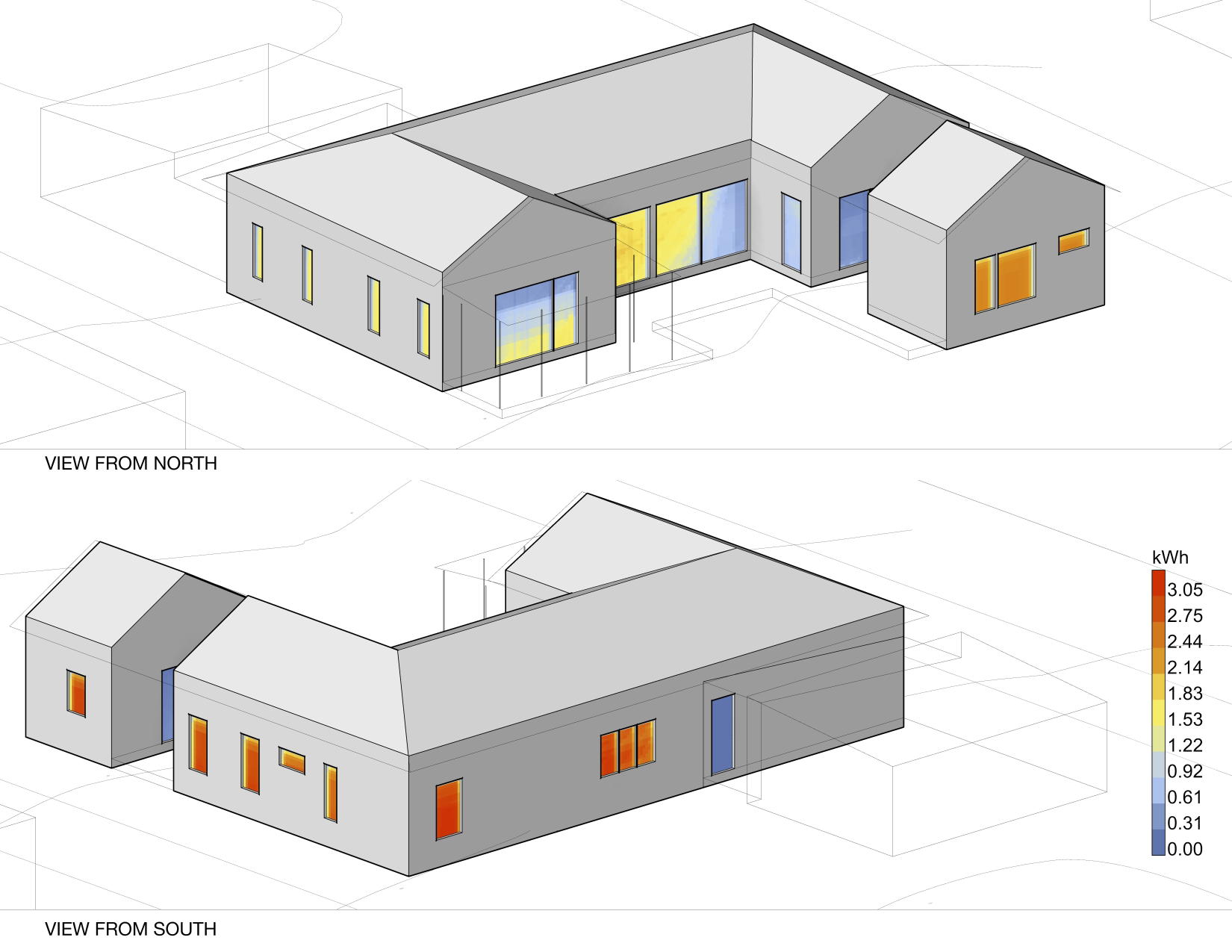
Summer Average Solar Radiation (kWh)

Summer Solar Radiation values seen from the north-west
  1. It is strongly recommended to include horizontal overhang shades (~12-18" deep) over all south/south-west glazing in order to reduce the cooling energy demand and overheating risk. Exterior sun-shades should be supplemented with robust interior blinds / shades in order to offer the users additional options for solar control during hot periods.
  2. Only limited solar exposure is observed on the north 'courtyard' glazing, although due to the size of the units, some risk of discomfort glare and overheating are still present. The primary solar load on these north units is late-afternoon, which further increases the overheating risk as this time coincides with the period of highest ambient temperatures. It is recommended to ensure that the large glazing units are outfitted with robust interior solar shades in order to allow the occupants to mitigate these effects as needed.