Recommended Assemblies

The following assembly U-Values have been assessed using Flixo Energy v8.1. All assemblies are proposed based on the Energy model results shown in previous sections. Note: All 2-dimension heat flow analysis simulations have been executed following the protocols outlined in ISO 6946 and ISO 10211 where applicable.

Ground Floor Slab
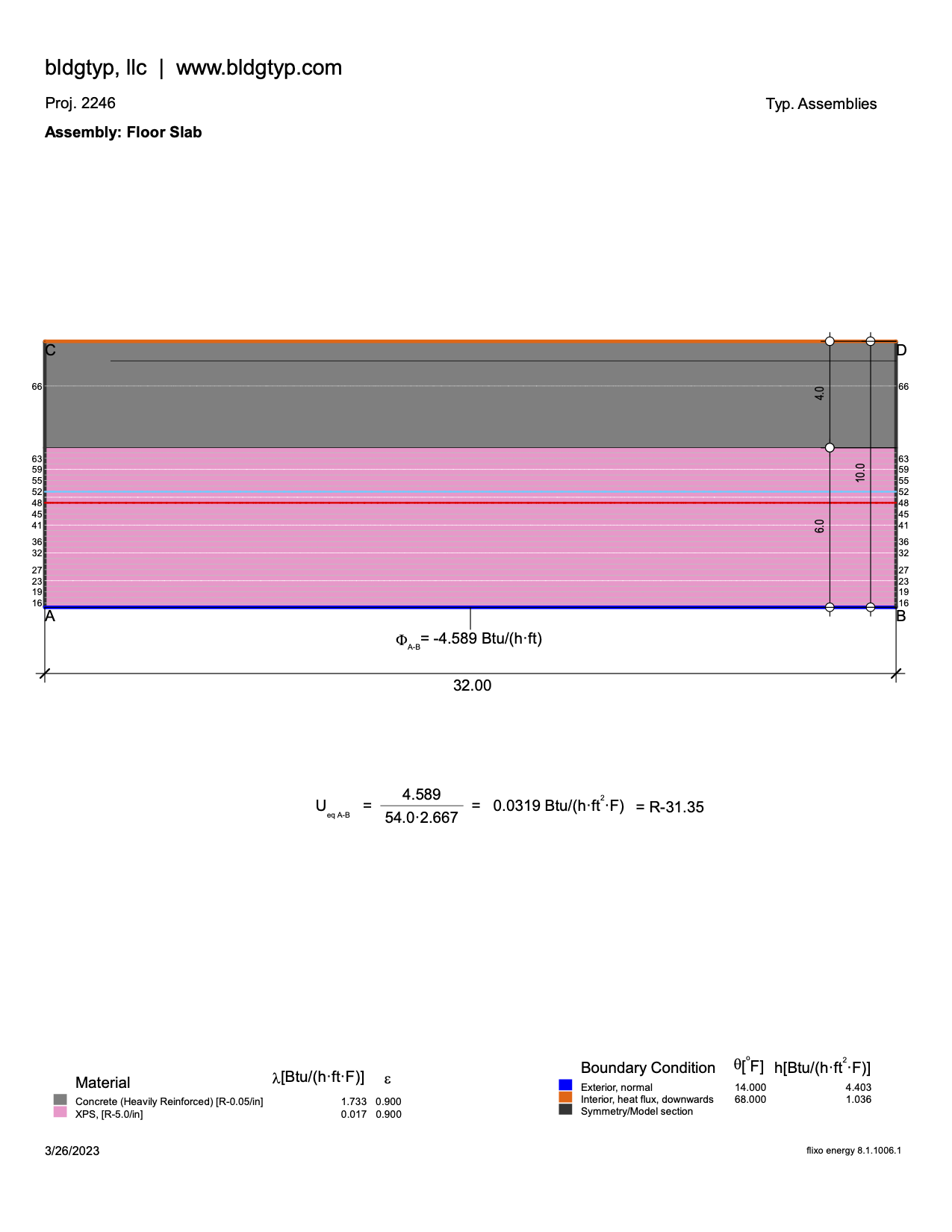
Recommended Assembly Notes:

  1. Note: All concrete sizing as per Structural Engineer. Concrete is shown for illustration purposes only.
  2. Target R30. ~6" sub-slab XPS or high-performance EPS ( Neopor Graphite EPS or sim.).
  3. Sub-slab air and vapor barrier to be installed directly below concrete (above insulation). Use 15 Mil Stego-wrap or similar
  4. Tape / Seal all penetrations and seams of sub-slab air and vapor barrier.

Ext. Wall: Above Grade
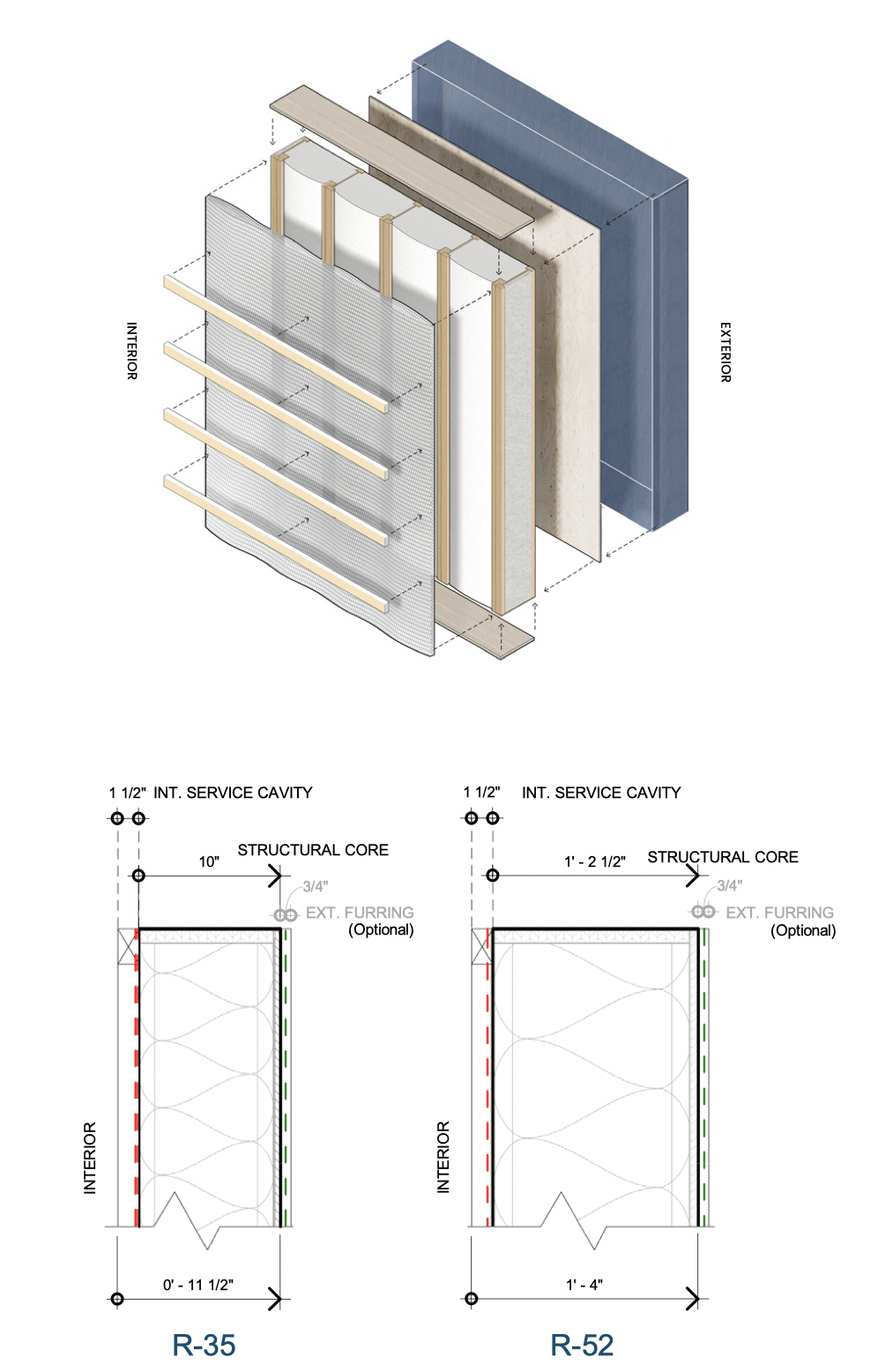
Recommended Assembly Notes:

  1. B.Public R-35 Wall panel. If Phius CORE certification is desired, use R-52 wall panel.

Sloped Roof
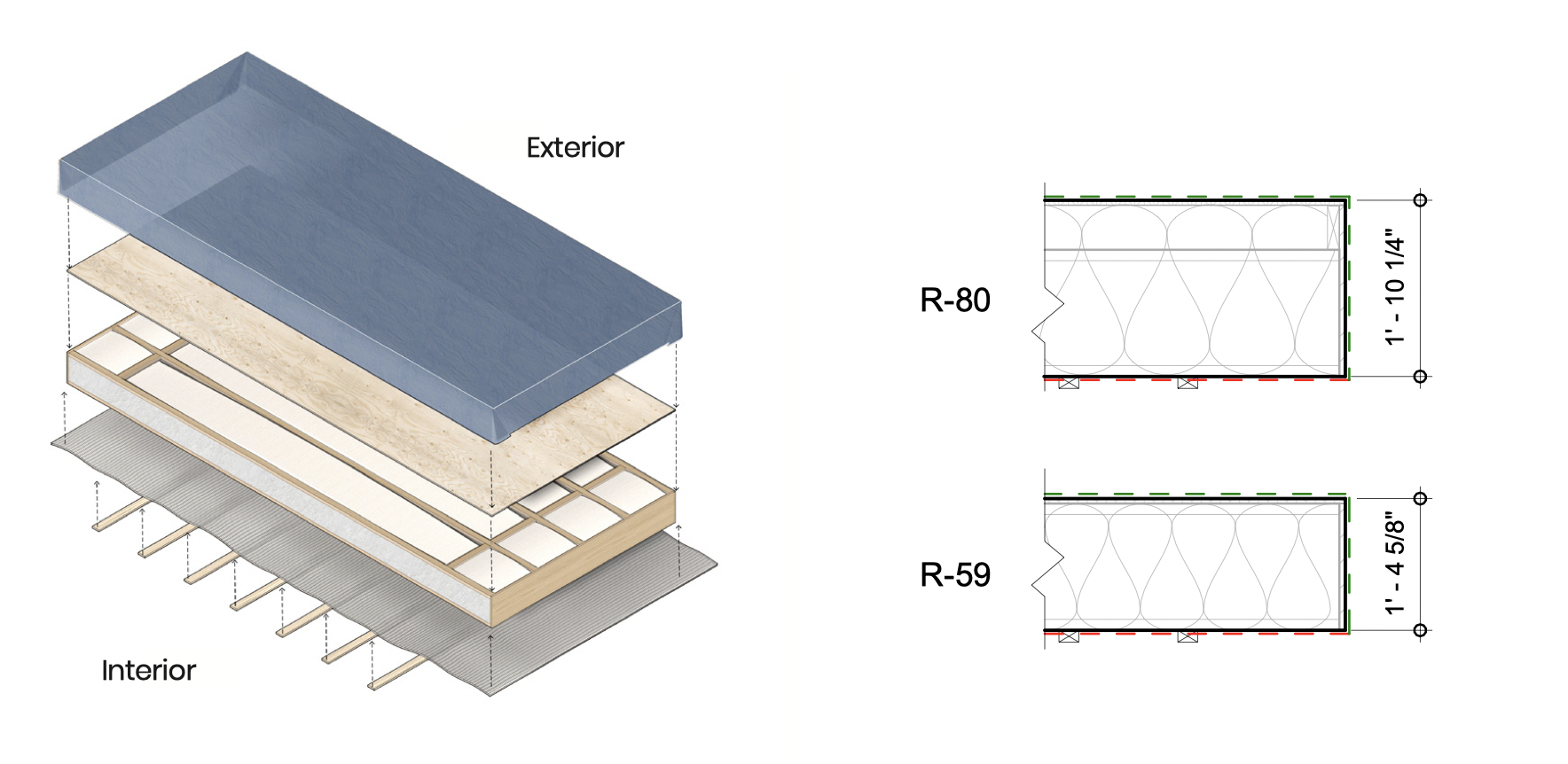
Recommended Assembly Notes:

  1. B.Public R-50 Roof panel. If Phius CORE certification is desired, use R-80 roof panel.

Building Air-tightness

The primary role of airtightness in buildings is to avoid interstitial condensation and mold/moisture damage to the structure during the winter and shoulder months. Additionally, in hot climates the airtightness plays an additional important role in restricting warm outdoor air and moisture vapor ingress from the exterior. This helps to reduce energy consumption needed for cooling and dehumidification while improving occupant comfort and building resiliency.

As well as its role in ensuring building durability, airtightness levels have a simple linear relationship to the building’s heat loss: the more air- tight the construction the less heat is lost in winter and the better the energy performance. In addition, the airtightness of the building has a large effect on the indoor relative humidity during the summer months with a corresponding reduction of cooling energy consumption and dehumidification need.

Winter Heat Loss due to Envelope Air Leakage


Code-minimum construction in most states requires an airtightness rate of somewhere between 3 to 7 air-changes per hour (ACH) and 2018 North Carolina Residential Code / Climate Zone 4a requires buildings to demonstrate an airtightness level of less than 0.3 cfm/ft2-envelope, which equates to ~5.0 ACH @ 50Pa for this building. In order to meet the Phius CORE performance level, this project would have to achieve the extremely stringent air-tightness level of less than 0.06 cfm/ft2-envelope, which equates to ~1.91 ACH@50Pa for this building. The graph above shows the heat loss at various levels of airtightness for the building. Improving airtightness to this low level (1.9 ACH@50) or lower is one of the best ways to improve performance and increase comfort and durability and is the recommended target for this building.